Charting the Course: Strategic Recommendations for a Sustainable Internet.

The infrastructure of the Internet—though often perceived as an invisible cloud—relies on a massive, physical network of servers, data centers, and global operations. This vast ecosystem requires significant energy, and as a central pillar of this infrastructure, ICANN has a responsibility to lead the charge in mitigating its environmental impact.
To fulfill our mission of transforming ICANN into a carbon-neutral organization, GreenICANN has established a clear roadmap. By defining our scope through actionable short- and long-term targets, we can systematically reduce the carbon footprint of the Domain Name System (DNS) and the community that supports it.
Here is our strategic path forward.
Immediate Action: Mitigating Flight Emissions
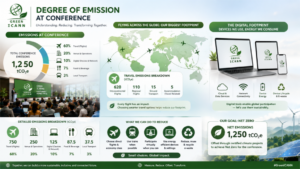
The global nature of the ICANN community is one of its greatest strengths, fostering international collaboration and multi-stakeholder governance. However, the travel required to convene these global meetings contributes heavily to the organization’s carbon footprint.
Our most pressing, immediate objective (ASAP) is to address the emissions associated with this travel. This requires a multifaceted approach: implementing robust carbon offsetting programs for necessary travel, continuing to refine and promote high-quality hybrid meeting models to reduce physical attendance requirements, and establishing sustainable travel policies for staff and community members.
Short-Term Outreach: Engaging with Registrars
The hardware that keeps the Internet running—specifically the vast network of name servers—is a primary driver of the DNS’s energy consumption. We cannot optimize what we do not measure, nor can we change practices without community buy-in.
Our short-term strategy involves direct outreach to registrars worldwide. By initiating conversations regarding the number and operational efficiency of their active name servers, we can begin to map the current environmental impact of the registrar ecosystem. This collaborative dialogue is essential for identifying inefficiencies and sharing best practices for power-saving server management and optimized network routing.
Short-Term Recognition: Championing Green Registrars
Transitioning to a sustainable model is a significant undertaking, but many organizations are already leading the way. We believe that positive reinforcement and visibility are powerful tools for industry-wide change.
In the short term, GreenICANN will actively identify and promote registrars that are currently demonstrating sustainable practices. Whether through utilizing renewable energy for their data centers, implementing aggressive energy efficiency protocols, or offering carbon-neutral hosting options, these pioneers deserve recognition. Championing these green registrars not only rewards their efforts but also provides a proven, profitable blueprint for others in the industry to follow.
The Long-Term Vision: Compensating DNS Energy Consumption
While immediate travel mitigation and registrar engagement will yield crucial short-term reductions, our ultimate goal requires looking at the broader picture. The global DNS infrastructure is a massive, complex energy consumer.
Our long-term strategy focuses on developing comprehensive mechanisms to offset the broader emissions generated by this infrastructure. This involves working with the ICANN community, technical experts, and environmental scientists to accurately measure the total energy footprint of the DNS and implement large-scale, verifiable compensation strategies. This is the most complex of our recommendations, but it is the necessary final step to achieving a truly sustainable, carbon-neutral Internet ecosystem.
The path to a green Internet requires collective action. By focusing on these clear, structured recommendations, the GreenICANN initiative is moving beyond awareness and driving the tangible changes needed to protect our shared future.
About The Author