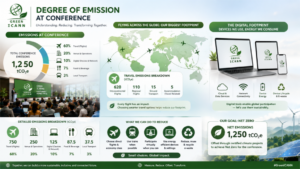
The Green Digital Frontier: How Companies Are Adapting to a Digital Workforce.
Build Your Website in Minutes with One-Click Import – No Coding Hassle!

In the Dynamic World of WordPress
As organizations globally transition from temporary remote work setups to permanent hybrid and digital-first models, a critical secondary transformation is underway. Beyond the obvious benefits of flexibility and overhead reduction, the rise of the digital workforce has emerged as a cornerstone of corporate sustainability strategy.
We’re passionate about quality code and elegant design, ensuring your website creation is an effortless blend of sophistication and simplicity. With unwavering support from our dedicated team, you’re never alone.
The Commute and Direct Carbon Abatement.
The most immediate and quantifiable environmental benefit of remote work is the reduction in daily commuting. For decades, passenger vehicles have remained one of the largest contributors to greenhouse gas emissions. By removing millions of cars from the road, companies are seeing a direct, passive drop in their Scope 3 emissions. Recent studies indicate that transitioning to a fully remote work model can reduce an individual worker’s work-related carbon footprint by up to 54% compared to traditional office environments, primarily driven by minimized commuting and optimized home energy usage.
Rethinking Corporate Real Estate.
Commercial office spaces are notoriously energy-intensive. Heating, cooling, and powering massive high-rises account for a substantial portion of urban carbon footprints. In response, modern companies are downsizing their physical footprints, adopting “hot-desking,” or moving entirely to smaller, shared co-working spaces. This consolidation directly reduces baseline energy consumption, allowing corporate real estate to transition from a massive carbon liability to a lean, efficient operation.
The Challenge of Decentralized Emissions
However, the green remote revolution is not without its paradoxes. While corporate office emissions drop, energy consumption is effectively decentralized to individual employee households. Forward-thinking companies are recognizing that “out of sight, out of mind” does not apply to carbon accounting. Pioneer enterprises are now introducing home-office green policies, such as:
Digital Minimalism: Training teams to reduce digital pollution through streamlined cloud storage and optimized video conferencing habits.
Green Energy Subsidies: Incentivizing employees to switch to renewable residential energy providers.
E-Waste & Hardware Management: Sourcing energy-efficient hardware and providing safe, localized recycling avenues for old corporate laptops.
Sustainable Digital Infrastructure
Because a digital workforce relies heavily on cloud technologies, corporate sustainability now extends deeply into the infrastructure stack. Companies are actively auditing their cloud service providers, opting for data centers powered entirely by wind, solar, or geothermal energy. By pairing remote workforce policies with green hosting and clean IT, businesses ensure that their digital tools do not silently offset their physical carbon savings.
About The Author