Global Action, Local Impact: Green ICANN in the Regions.
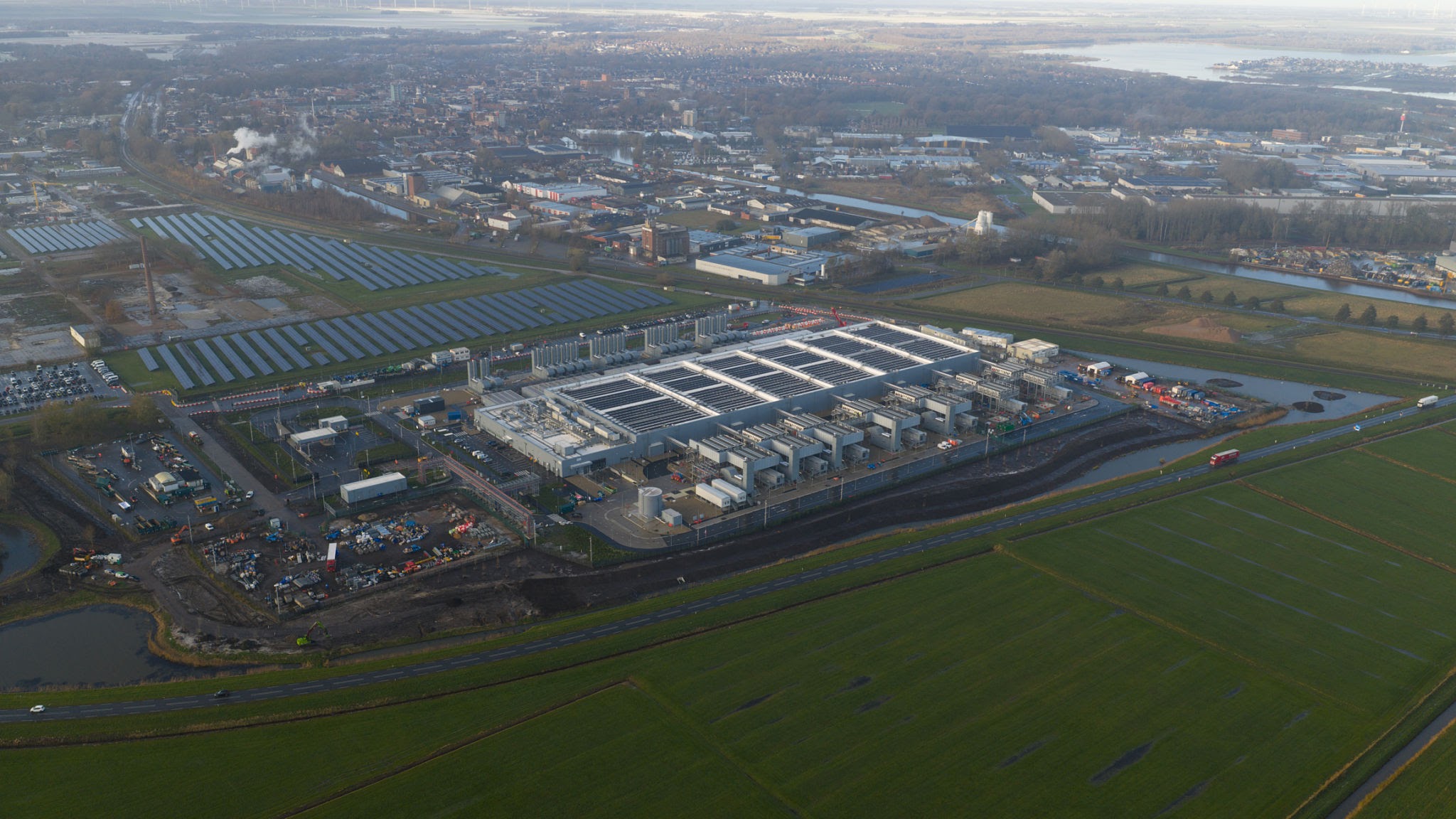
Dynamic aerial drone close-up of a newly built hyperscale data center in Winschoten, Netherlands. This facility integrates cutting-edge AI infrastructure running on sustainable and renewable energy sources, showcasing the future of green technology.
The Internet is a global resource, but its infrastructure is decidedly local. Powering data centers, maintaining telecom networks, and expanding digital access all require physical resources that impact local ecosystems.
At Green ICANN, we recognize that a “one-size-fits-all” approach to sustainability does not work. Different regions face unique challenges—from energy grid reliability in emerging markets to regulatory compliance in highly developed tech hubs. Here is how the ICANN community and our regional partners are tailoring green tech strategies to meet local needs while advancing global digital sustainability.
Africa: Leapfrogging with Green Infrastructure
In Africa, the expansion of the Internet is happening rapidly, often outpacing the development of traditional power grids. Rather than relying on legacy fossil fuel systems, the region is uniquely positioned to leapfrog directly to sustainable energy solutions.
Through alignment with the UN Sustainable Development Goals (SDGs) and initiatives like the Alliance for Green Infrastructure in Africa (AGIA), the focus here is on decentralized, renewable connectivity.
- Off-Grid Telecommunications: Replacing diesel generators at remote cellular and internet towers with hybrid solar systems and solid-state battery storage.
- Capacity Development: Empowering a new generation of African network engineers with the skills to design and manage climate-resilient, low-carbon infrastructure.
- Pay-As-You-Go Solar: Integrating mobile money with home solar networks to connect millions of off-grid users to the digital economy sustainably.
Europe: Setting the Standard for Data Centers
Europe is home to some of the world’s highest concentrations of internet infrastructure and cloud services. Consequently, the region’s primary focus is on maximizing energy efficiency and establishing rigorous regulatory frameworks.
Driven by the EU Taxonomy and the Corporate Sustainability Reporting Directive (CSRD), the European tech sector is prioritizing measurable sustainability outcomes.
- The EU Code of Conduct: Data centers are implementing aggressive energy efficiency standards, optimizing server cooling, and committing to 100% renewable energy procurement.
- Circular Economy Practices: Moving beyond just energy use, European facilities are pioneering the reuse of waste heat—routing the thermal byproduct of massive server farms into municipal heating grids for local homes and businesses.
- Standardized Reporting: Creating consistent, transparent frameworks for ESG (Environmental, Social, and Governance) reporting to ensure that as digital infrastructure scales, its carbon footprint shrinks.
Asia Pacific: Balancing Rapid Scale with GreenTech Innovation
The Asia Pacific region faces the dual challenge of managing explosive digital growth while mitigating severe climate risks. Home to over 60% of the world’s population, this region is utilizing high-tech innovation to drive down the carbon cost of internet expansion.
- Micro-Grids for Island Nations: In places like Fiji and other Pacific Island nations, remote communities are adopting Stand Alone Power Supplies (SAPS) and green hydrogen technology to completely remove their reliance on shipped diesel for internet access.
- AI-Driven Optimization: Leveraging artificial intelligence to optimize energy loads in real-time across massive, distributed networks, ensuring power is only drawn when and where it is absolutely needed.
- Policy and Patents: With a surge in green tech patents and government-led low-carbon pilot zones, the region is heavily investing in the hardware needed for the next generation of eco-friendly digital infrastructure.
The Americas: Fostering Public-Private Collaboration
Across North America and the Latin American/Caribbean (LAC) regions, the sheer scale of the tech industry requires deep collaboration between massive private sector players and public policy advocates.
- Corporate Power Purchase Agreements (PPAs): Major tech companies and ISPs are driving renewable energy development by funding massive wind and solar farms to offset their network usage.
- Community Networks: In the LAC region, local communities are building and maintaining their own solar-powered mesh networks to ensure internet resilience against extreme weather events.
About The Author